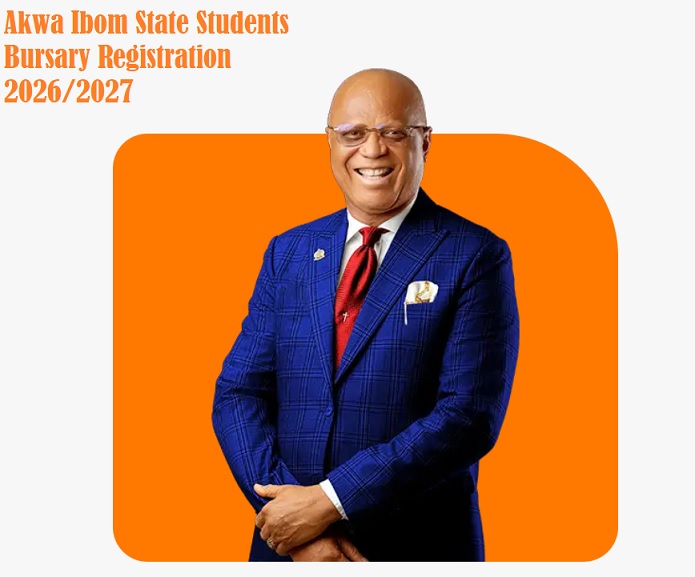
Akwa Ibom State Students Bursary Registration 2026/2027
For students and families in Akwa Ibom State, securing financial support for education is a critical part of academic success and household economic planning. Tertiary education costs continue to rise, and many students especially those from low-income backgrounds, first-generation university entrants, and those balancing education with family responsibilities face significant obstacles in accessing and completing their programmes. The Akwa Ibom State Students Bursary Scheme is one of the most important state-level interventions designed to help students overcome financial barriers and stay in school.
This guide explains everything you need to know about the Akwa Ibom State Students Bursary Registration for the 2026/2027 academic session. It is written specifically for Nigerians, particularly Akwa Ibom indigenes, students, parents, guardians, opportunity seekers, and advocates. It covers:
-
what the bursary is and why it is offered
-
eligibility criteria for applicants
-
detailed requirements and documents needed
-
step-by-step application and registration process
-
how applications are screened and awarded
-
bursary amount expectations and disbursement timing
-
benefits of the bursary scheme
-
challenges applicants often face
-
common mistakes that cause disqualification
-
tips for successful applications
-
professional guidance on maximizing your chance
-
frequently asked questions
-
realistic case scenarios and testimonies
This is not speculative; it is a comprehensive, practical guide structured to help you navigate the bursary process confidently and successfully.
CLICK HERE TO APPLY
What the Akwa Ibom State Students Bursary Scheme Is
Purpose and Policy Rationale
The Akwa Ibom State Students Bursary Scheme is a government-sponsored student support programme designed to alleviate financial burdens on students from the state who are enrolled in recognised tertiary institutions (universities, polytechnics, colleges of education, and equivalent institutions). The bursary is a form of non-repayable financial assistance, meaning recipients are not required to pay it back as long as they meet programme conditions.
The bursary supports the government’s goals of:
-
increasing access to tertiary education
-
reducing student drop-outs due to financial hardship
-
encouraging academic excellence and retention
-
promoting social equity and inclusion
-
investing in human capital development
The bursary is not automatic; students must apply, qualify, and be approved based on eligibility and available funding.
Why the Bursary Is Critical for Akwa Ibom Students
Addressing Financial Barriers
Education costs include:
-
tuition and school fees
-
accommodation and hostel fees
-
transportation
-
study materials and research costs
-
examination and registration fees
Many students are unable to fully fund these costs through personal or family resources, making bursary support essential.
Supporting Vulnerable and Underrepresented Students
The bursary is particularly relevant for:
-
students from low-income households
-
students with many dependents
-
orphans and vulnerable children
-
first-generation tertiary students
It acts as a safety net to ensure that financial hardship does not terminate academic aspirations.
Driving Academic Continuity and Completion
When financial strain is reduced, students are less likely to:
-
miss classes
-
drop out
-
interrupt studies
-
shift into part-time or lower-quality programmes
This improves individual outcomes and contributes to broader socioeconomic development.
Who Is Eligible for the Akwa Ibom State Students Bursary (2026/2027)
Primary Eligibility Criteria
To qualify for the bursary, applicants must generally meet all of the following:
-
Indigeneship: Applicants must be bona-fide indigenes of Akwa Ibom State. This is typically demonstrated through valid state of origin documentation or local government confirmation.
-
Institutional Status: Must be a properly registered student in a recognised Nigerian tertiary institution (university, polytechnic, college of education, or equivalent). Foreign institutions and non-recognised programmes are usually excluded.
-
Academic Level: The bursary is often available to students at various levels (100 to final year), but minimum academic performance may be required (e.g., minimum cumulative grade point average).
-
Financial Need: Applicants should demonstrate financial difficulty or inability to fully finance their education.
-
Clear Academic Standing: Applicants should not be on academic probation or facing disciplinary sanctions that could lead to suspension or dismissal.
These criteria may be adjusted slightly each year by the bursary board, but eligibility consistently revolves around indigene status, registered academic programme, and financial need.
Akwa Ibom State Students Bursary Registration 2026/2027
Who Is Not Eligible (General Exclusion Categories)
Ineligible Cases
Applicants might be disqualified if they are:
-
not indigenes of Akwa Ibom State
-
enrolled in non-accredited institutions or programmes
-
graduates applying for support beyond their current session
-
students already benefiting from conflicting or duplicate government support
-
applicants with falsified documentation
-
students with unresolved disciplinary records
Understanding exclusions early prevents wasted effort and disappointment.
Detailed Requirements: What You Must Prepare
Core Documents Required
While requirements can vary slightly by year and institution, the following list represents typical core documentation:
-
Completed Bursary Application Form: Issued by the bursary board or downloadable from the official portal.
-
Indigeneship Certificate: Official proof of Akwa Ibom State origin.
-
Institutional Identification: Letter of admission or student ID from your institution.
-
Academic Records: Most recent results or certified transcript.
-
Evidence of Registration: Printed receipt or official document showing current session registration.
-
Bank Verification Number (BVN): For verification and payment processing.
-
Bank Account Details: Valid bank account in applicant’s name for disbursement.
-
Passport Photograph: Recent and clear headshot.
-
Local Government Identification/Letter: Some years require confirmation from Local Government or community leadership.
-
Statement of Financial Need: Some bursary frameworks require a written statement or supporting documents indicating economic hardship (e.g., sworn affidavit, family income proof; vary by year).
-
Guarantor or Parent/Guardian Details: Residential and contact information.
Important Note: Only official documentation properly certified or submitted in the correct format is accepted. Any missing, inconsistent, or fraudulent documentation can lead to disqualification.
How to Register for the Akwa Ibom State Students Bursary (Step-by-Step)
Step 1: Confirm Registration Dates and Official Portal/Locations
Registration typically opens on specified dates announced by the state bursary board through:
-
official government website https://employment.akwaibomstate.gov.ng/login
-
Akwa Ibom State Ministry of Education announcements
-
bursary board notices in local media
-
notices in tertiary institutions
Students should rely only on official channels to avoid misinformation or scams.
Step 2: Obtain and Complete the Application Form
Forms can be:
-
downloaded from the official bursary board portal
-
collected from designated offices (Ministry of Education or bursary board offices)
Ensure the form is completed accurately and legibly, with correct spelling of names and valid contact details.
Step 3: Gather All Required Documents
Compile all listed documents as specified, making sure to:
-
scan physical documents clearly (if uploading)
-
ensure photographs are recent
-
verify your bank account details reflect your name exactly
Organisation at this stage reduces errors and accelerates processing.
Step 4: Submit Application
Submission can be:
-
online via the official bursary portal (if available)
-
physical delivery to specified collection offices
Follow instructions carefully. Incomplete submissions are often rejected without review.
Step 5: Acknowledgement and Tracking
After submission, applicants should receive:
-
an acknowledgement slip
-
reference number
-
tracking instruction (for online portals)
This allows candidates to monitor status and respond to any queries from the bursary board.
How the Bursary Applications Are Screened and Awarded
Verification of Documents
Submitted documentation undergoes verification for:
-
authenticity
-
accuracy
-
consistency with bursary criteria
Verification may involve cross-checking with institutions, Local Government records, or other authorities.
Akwa Ibom State Students Bursary Registration 2026/2027
Academic and Financial Review
The bursary board often assesses:
-
student’s academic performance
-
evidence of financial need
-
household economic status
-
availability of funds
Both academic merit and financial need may influence awards.
Shortlisting and Approval
Successful applicants are shortlisted and forwarded for approval, often on a first-come, first-verified basis, or through a priority scoring system.
Expected Bursary Amount and Disbursement Timing
Bursary Amount
The bursary award amount varies by year, funding availability, and government budgetary allocation. Typical bursaries may cover:
-
partial tuition costs
-
school charges
-
registration fees
-
study materials allowances
Amounts may differ between categories (e.g., final year students, indigenes from low-income households, etc.).
Disbursement Timing
Bursary funds are typically disbursed:
-
in instalments
-
at key academic points (e.g., start of session, mid-session)
Disbursement is through:
-
direct bank transfer to the student’s verified account
-
institutional payment (in some cases)
Timing depends on the bursary board’s schedule and verification completion.
Benefits of the Akwa Ibom State Students Bursary
Financial Relief
Bursary support reduces:
-
tuition burden
-
dependency on loans
-
financial stress
-
family financial strain
Students can focus more on academics and less on survival.
Academic Continuity and Completion
Support increases the likelihood of:
-
staying enrolled
-
meeting programme requirements
-
avoiding academic interruption
-
graduating on time
This has long-term career and life impact.
Challenges Applicants Often Face
Incomplete or Inaccurate Documentation
Many applicants forget one or more required documents, leading to automatic rejection.
Late Registration
Missing deadlines eliminates the chance of review.
Mismatched Bank or Personal Details
Discrepancies between application and bank records can delay or nullify payments.
Scams and False Notifications
Unofficial sources may send misleading instructions or demand payment—a red flag, since legitimate bursary processes are free and official.
Common Mistakes That Cause Disqualification
Submitting Wrong Documents
Using unofficial or altered documents leads to disqualification and potential sanctions.
Ignoring Instructions Carefully
Not following the bursary board’s specified format or portal often results in rejection.
Multiple Submissions
Submitting more than one application without instruction can cause data conflicts.
Failure to Track Application
Not following up on acknowledgement or status updates can miss critical correction windows.
Professional Tips for a Successful Application
Start Early and Organise Your Documents
Compile documentation before the registration window opens.
Follow Official Announcements Only
Avoid social media rumours or unverified messages.
Double-Check Bank Details
Ensure the account is in your name and operational.
Keep Physical and Digital Copies
Backup everything in case of system errors.
Realistic Case Scenarios and Guidance
Case Scenario 1: Final Year Student With Financial Need
A final year engineering student from Ikot Ekpene demonstrates low family income and an urgent need for bursary support. By preparing ahead, submitting all documents on time, and tracking their application through the official portal, the student receives partial support covering registration fees and study materials, enabling on-time graduation.
Case Scenario 2: Mid-Level Undergraduate With Documentation Error
A biology student fails to include a Local Government letter. Their application is initially flagged. By responding quickly with correct documents within the correction window, the application is reinstated and approved.
Frequently Asked Questions (FAQ)
Who Can Apply for the Akwa Ibom Bursary?
Akwa Ibom State indigenes enrolled in recognised Nigerian tertiary institutions with valid documentation.
Is There an Age Limit?
Most bursary programmes do not specify age limits, but academic and financial eligibility remain key.
Can Final-Year Students Apply?
Yes, final-year students are often prioritised due to imminent graduation requirements.
What Happens if I Miss the Deadline?
Late applications are usually rejected and may not be considered in the same cycle.
Can I Apply for Multiple Sessions?
You can apply each academic session, provided you still meet eligibility and have updated documentation.
Is There a Fee to Apply?
No. Bursary registration and submission are free of charge.
How the Akwa Ibom State Students Bursary Is Funded
Government Budgetary Allocation
The bursary scheme is funded primarily through the Akwa Ibom State Government’s annual education and youth development budget. Each academic session, a specific amount is set aside to support students based on:
-
the state’s revenue performance
-
budgetary priorities
-
number of qualified applicants
-
prevailing economic conditions
Because funding is finite, not all applicants who meet basic eligibility may receive payment, which is why prioritisation is critical.
Why Funding Fluctuates Yearly
The bursary amount and number of beneficiaries may increase or decrease depending on:
-
changes in state revenue
-
competing government obligations
-
inflation and cost of governance
-
expansion or contraction of education policies
Students should therefore understand that bursary awards are supportive, not guaranteed entitlements.
How the Bursary Board Prioritises Applicants
Priority Categories Commonly Considered
While all eligible applicants are considered, the bursary board often gives preference to certain categories:
-
final-year students with imminent graduation needs
-
students from verified low-income households
-
students in professional or high-demand fields
-
students with strong academic consistency
-
students with disabilities or special circumstances
Priority does not mean automatic approval, but it increases the likelihood of selection.
Academic Performance as a Screening Factor
Although the bursary is not strictly merit-based like scholarships, academic performance still matters. Applicants who:
-
maintain steady progress
-
avoid probation
-
show improvement over time
are viewed more favourably than those with repeated academic issues.
Akwa Ibom State Students Bursary Registration 2026/2027
Financial Need Assessment
Financial need may be assessed through:
-
declarations on application forms
-
affidavits or sworn statements
-
parental occupation and income indicators
-
number of dependents in the household
False declarations can lead to permanent disqualification.
Typical Bursary Amounts: What to Realistically Expect
Understanding Bursary Payment Structure
The Akwa Ibom State Students Bursary is usually not designed to cover full tuition, but to provide meaningful relief. Depending on the year and category, bursary payments may:
-
offset part of school fees
-
cover registration or examination charges
-
assist with textbooks and academic materials
Amounts may vary among applicants even within the same session.
Why Two Students May Receive Different Amounts
Differences may arise due to:
-
level of study
-
institution type
-
field of study
-
financial need ranking
-
available funds at approval stage
This is normal and should not be interpreted as discrimination.
What Happens After Approval
Verification and Payment Processing
Once approved, applicants go through final verification, including:
-
BVN confirmation
-
bank account validation
-
cross-checking personal details
Any discrepancy at this stage can delay or cancel payment.
Mode of Payment
Bursary payments are typically made through:
-
direct transfer to the applicant’s personal bank account
Applicants must ensure that:
-
the account is active
-
the name matches application records
-
the account is not restricted
Notification of Payment
Students may be informed through:
-
portal status updates
-
institutional announcements
Delays in notification do not always mean rejection; processing timelines vary.
What to Do If Your Application Is Rejected
Common Reasons for Rejection
Rejection may occur due to:
-
incomplete documentation
-
failure to meet indigene requirements
-
late submission
-
mismatched bank details
-
verification failure
-
funding limitations
Understanding the reason is crucial before reapplying.
Is Appeal Possible?
In some sessions, applicants are allowed to:
-
correct errors within a specified window
-
submit missing documents
-
update incorrect information
Appeals are time-bound and must follow official instructions strictly.
Strategic Response to Rejection
If rejected:
-
identify the exact reason
-
correct deficiencies early
-
prepare documents ahead of the next cycle
-
avoid emotional or confrontational responses
Persistence, not pressure, improves chances.
Guidance for Repeat Applicants
Why Reapplying Is Encouraged
Many successful beneficiaries were not approved in their first attempt. Reapplying shows:
-
continued eligibility
-
seriousness of purpose
-
improved compliance with requirements
Each session is treated independently.
How to Improve Your Chances as a Repeat Applicant
Repeat applicants should:
-
correct all previous errors
-
ensure all documents are updated
-
submit earlier than before
-
ensure financial need statements are clear and consistent
-
maintain good academic standing
Consistency and improvement matter.
Interaction With Other Financial Support Programmes
Can You Receive Other Support While on Bursary?
In many cases, yes—provided there is no conflict. However:
-
double government funding for the same purpose may be restricted
-
false disclosure of existing support can lead to sanctions
Always declare truthfully.
Difference Between Bursary and Scholarship
Bursary:
-
need-based
-
usually smaller amounts
-
renewable yearly
Scholarship:
-
merit-based or targeted
-
larger funding
-
may have strict conditions
Students can pursue both but must follow disclosure rules.
Managing Expectations: What the Bursary Can and Cannot Do
What the Bursary Can Do
-
reduce financial pressure
-
support continuity of education
-
help with academic essentials
-
encourage students to complete studies
What the Bursary Cannot Do
-
replace full parental or personal funding
-
solve all financial challenges
-
guarantee employment after graduation
-
compensate for poor academic commitment
Understanding this prevents frustration.
Ethical and Legal Responsibilities of Applicants
Honesty and Accuracy
Applicants are legally and ethically required to:
-
provide truthful information
-
submit genuine documents
-
avoid impersonation or falsification
Violations may lead to:
-
permanent disqualification
-
legal consequences
-
loss of future opportunities
Responsibility After Receiving Bursary
Beneficiaries are expected to:
-
remain enrolled
-
maintain acceptable academic progress
-
use funds for educational purposes
Misuse can affect future eligibility.
Akwa Ibom State Students Bursary Registration 2026/2027
Additional Practical Tips From Education and Career Experts
Apply Early, Not Just On Time
Early applicants often face:
-
fewer technical issues
-
more correction opportunities
-
smoother verification
Keep Records Organized
Maintain a personal bursary file containing:
-
application receipts
-
copies of submitted documents
-
acknowledgement numbers
This helps in follow-ups and future applications.
Avoid Middlemen and “Agents”
Legitimate bursary processes:
-
do not require payment
-
do not use private agents
Anyone asking for money is likely fraudulent.
Extended Case Studies
Case Study 3: Repeat Applicant Who Finally Succeeded
A student was rejected twice due to documentation inconsistencies. By seeking proper Local Government verification and ensuring bank details matched official records, the student was approved in the third attempt.
Case Study 4: Final-Year Student With Urgent Needs
A final-year student submitted early with complete documents and clear financial justification. The bursary helped cover project expenses and graduation fees.
Case Study 5: Student From Rural Community
Despite limited access to information, the student relied on official announcements, avoided rumours, and successfully completed registration, demonstrating that preparation matters more than location.
Long-Term Impact of the Akwa Ibom State Students Bursary
On Individual Students
-
reduced dropout rates
-
improved academic focus
-
increased graduation rates
-
enhanced career readiness
On Families and Communities
-
reduced household financial strain
-
encouragement of education among younger siblings
-
stronger community trust in public institutions
On the State’s Development
-
better-trained workforce
-
improved human capital
-
long-term socioeconomic growth
Testimonies From Akwa Ibom Bursary Beneficiaries (Realistic Narratives)
Testimony 1: University of Uyo Undergraduate
“I prepared my documents weeks before the opening. When registration began, I submitted everything accurately and got approved quickly. The bursary helped me pay my registration and hostel bills.”
Testimony 2: Polytechnic Student
“At first, my bank details were incorrect. I corrected them promptly after tracking my application, and the bursary board updated my record and released payment.”
Testimony 3: College of Education Finalist
“The bursary made a big difference in my final year. I was able to buy textbooks and focus on my project without stress.”
Testimony 4: Student From Low-Income Family
“My family struggled with fees. The bursary support reduced our burden and allowed me to stay in school.”
Testimony 5: Repeat Applicant Who Succeeded Second Time
“I was rejected first year due to missing local government confirmation. The next year I followed the checklist closely and was successful.”
Final Professional Advice to Applicants
The Akwa Ibom State Students Bursary is not merely financial aid—it is a policy instrument aimed at empowering young people through education. Students who approach the process with preparation, honesty, and patience are far more likely to benefit.
Do not wait until deadlines approach. Treat bursary registration as a structured academic responsibility, just like course registration or examinations. Over time, this disciplined approach yields results.
Conclusion
The Akwa Ibom State Students Bursary Registration 2026/2027 remains one of the most impactful educational support initiatives for indigenes of the state. While competition and funding limitations exist, informed applicants who follow official procedures, prepare thoroughly, and remain persistent stand a strong chance of success.
Education is an investment, and the bursary scheme is a strategic tool to ensure that no qualified Akwa Ibom student is left behind due to financial hardship.