
USA Construction Loan Rates in 2026: What Borrowers Must Know Before Building

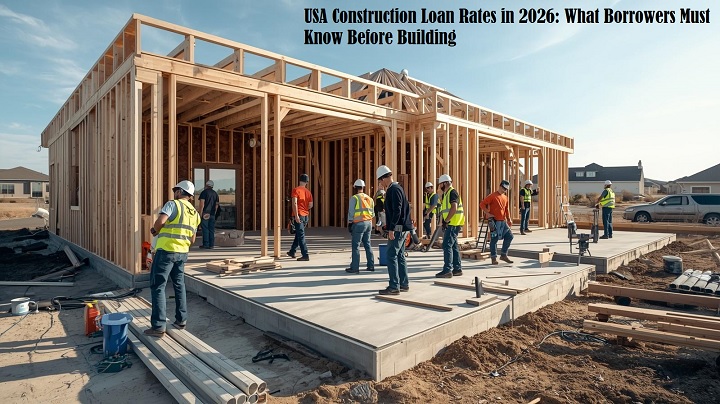
USA Construction Loan Rates in 2026: What Borrowers Must Know Before Building
Construction loan rates in 2026 are one of the most critical financial variables influencing residential and commercial development decisions across the United States. Unlike traditional mortgage rates, construction loan interest rates are structured differently because lenders assume higher risk during the building phase. Funds are disbursed in stages, collateral value evolves over time, and repayment structures are more complex.
In 2026, the U.S. lending environment is shaped by several macroeconomic factors:
-
Federal Reserve monetary policy direction
-
Inflation trends in building materials and labor
-
Housing supply shortages in high-demand states
-
Regional bank liquidity and capital requirements
-
Risk-based pricing models adopted by lenders
Borrowers researching “USA construction loan rates in 2026” are typically trying to determine:
-
What interest rates are currently being offered?
-
How do they compare to standard mortgage rates?
-
Are rates fixed or variable?
-
What are the qualification requirements?
-
Are there cost-saving strategies?
-
Is this the right time to build?
This guide answers those questions in depth.
What Is a Construction Loan?
A construction loan is a short-term financing product designed to fund the building of a property. Unlike a traditional home loan, which finances an already completed property, a construction loan covers the cost of land (if not already owned), labor, materials, permits, contractor fees, inspections, and contingency reserves.
There are generally three core structures available in 2026:
Construction-to-Permanent Loan
Also called a “one-time close loan,” this converts automatically into a traditional mortgage after construction is completed. Borrowers pay interest-only during construction, then begin standard principal-and-interest payments once the loan converts.
Stand-Alone Construction Loan
This is a short-term loan covering only the building phase. After completion, borrowers must apply for a separate mortgage to refinance the construction debt. This involves two closings and potentially two sets of fees.
Owner-Builder Loan
Designed for borrowers acting as their own general contractor. These carry higher underwriting scrutiny and sometimes higher rates due to increased risk exposure.
Average USA Construction Loan Rates in 2026
Construction loan rates in 2026 are generally higher than traditional mortgage rates due to the increased risk profile.
As of 2026, borrowers are typically seeing:
-
Construction-to-permanent loans: 6.75% to 8.50%
-
Stand-alone construction loans: 7.25% to 9.25%
-
Owner-builder loans: 7.75% to 10.00%
-
Commercial construction loans: 7.00% to 11.50% depending on risk tier
These ranges vary significantly depending on:
-
Credit score
-
Debt-to-income ratio
-
Loan-to-value (LTV)
-
Builder reputation
-
Project complexity
-
Geographic location
-
Loan size
-
Banking institution
High-credit borrowers (740+ FICO) with strong reserves and experienced builders may qualify at the lower end of the spectrum. Riskier profiles trend upward quickly.
USA Construction Loan Rates in 2026: What Borrowers Must Know Before Building
Why Construction Loan Rates Are Higher Than Mortgage Rates
There are several structural reasons construction loan rates exceed standard mortgage pricing:
1. Increased Risk
The property does not yet exist in its final form. Lenders rely on projections, appraisals based on future value, and contractor performance.
2. Draw-Based Disbursement
Funds are released in stages, meaning lenders must actively manage inspection and draw schedules.
3. Market Volatility
Construction costs fluctuate due to labor shortages, supply chain disruption, tariffs, and raw material pricing volatility.
4. Short-Term Structure
Most construction loans are 9–18 months in duration. Shorter-term risk pricing often carries a premium.
Fixed vs Variable Construction Loan Rates in 2026
Borrowers must understand rate structure options.
Variable (Adjustable) Rates
Most construction loans use adjustable rates tied to benchmarks such as:
-
Prime rate
-
SOFR (Secured Overnight Financing Rate)
-
U.S. Treasury yields
In 2026, adjustable-rate construction loans are more common than fixed options.
Advantages:
-
Lower initial rate
-
Flexibility if rates decline
Risks:
-
Payment increases if benchmarks rise
Fixed Construction Rates
Some lenders offer fixed-rate construction-to-permanent programs, locking the permanent mortgage rate at closing.
Advantages:
-
Rate certainty
-
Protection against future increases
Disadvantages:
-
Slightly higher starting rate
-
Less flexibility if market rates decline
How the Federal Reserve Impacts Construction Loan Rates
The Federal Reserve does not directly set mortgage or construction rates. However, its control over the federal funds rate influences:
-
Prime rate adjustments
-
Treasury yield movement
-
Bank lending costs
-
Liquidity access
If inflation remains controlled in 2026, rate stabilization may occur. If inflation reaccelerates, borrowing costs may remain elevated.
Borrowers should monitor Federal Reserve policy meetings because rate shifts often follow policy announcements.
Regional Variations in USA Construction Loan Rates
Rates vary significantly by state and region due to:
-
Local housing demand
-
Land values
-
Natural disaster risk
-
Insurance costs
-
State-level banking competition
High-Demand States (Typically Slightly Higher Rates)
-
Texas
-
Florida
-
California
-
Arizona
-
North Carolina
Lower-Cost Rural States (Often More Competitive)
-
Midwest states
-
Select Mountain West regions
In high-growth metropolitan areas, lenders price higher risk into loans due to land volatility and contractor demand.
Construction Loan Qualification Requirements in 2026
Borrowers seeking construction financing must meet stricter criteria than traditional homebuyers.
Credit Score
-
Minimum: 680 (most lenders)
-
Preferred: 720–760+
Down Payment
-
10% to 25% of total project cost
-
Higher for owner-builders or jumbo loans
Debt-to-Income Ratio (DTI)
-
Typically below 43%
-
Strong borrowers below 36% receive better pricing
Cash Reserves
Lenders often require:
-
6 to 12 months of mortgage reserves
-
Contingency fund (5–10% of construction cost)
Builder Approval
The contractor must:
-
Be licensed
-
Carry insurance
-
Have verifiable project history
-
Provide detailed construction timeline
The Loan-to-Value (LTV) Formula in Construction Lending
Construction lenders assess LTV based on “after-completion value.”
Example:
-
Total project cost: $500,000
-
Appraised completed value: $550,000
-
Loan amount: $400,000
-
LTV = 72%
Lower LTV equals lower risk, which can reduce rates.
What Costs Are Included in Construction Loan Financing?
Construction loans typically cover:
-
Land purchase (if not already owned)
-
Site preparation
-
Materials
-
Labor
-
Architectural fees
-
Engineering
-
Permits
-
Utility hookups
-
Contingency reserves
-
Interest reserve (sometimes)
Not covered:
-
Luxury upgrades beyond appraisal value
-
Furniture
-
Landscaping beyond basic allowance
Understanding the Draw Schedule
Construction loans operate on a draw system. Funds are released in phases:
-
Land acquisition
-
Foundation
-
Framing
-
Roofing
-
Electrical & plumbing
-
Interior finishes
-
Final inspection
An inspector verifies completion before funds are released. Delays may affect project timelines and cost structures.
Interest-Only Payments During Construction
Most borrowers pay interest-only payments on funds disbursed. Because money is released in stages, early payments are lower and increase gradually.
Example:
-
Month 1: $50,000 disbursed
-
Month 3: $150,000 disbursed
-
Month 6: $300,000 disbursed
Interest applies only to drawn amount.
Closing Costs in 2026 Construction Loans
Borrowers should budget for:
-
Origination fees (0.5%–1.5%)
-
Appraisal fees
-
Inspection fees
-
Title insurance
-
Recording fees
-
Legal review
-
Credit report fees
Construction loans often carry slightly higher closing costs than traditional mortgages.
Risk Factors That Increase Your Construction Loan Rate
-
Low credit score
-
High DTI
-
Minimal down payment
-
First-time builder
-
Custom luxury design
-
Rural or flood-prone land
-
Limited contractor experience
Strategies to Secure a Lower Construction Loan Rate in 2026
Improve Credit Score Before Applying
Even a 20-point increase can lower pricing tiers.
Increase Down Payment
Lower LTV directly reduces rate risk premium.
Choose an Experienced Builder
Lender-approved builders reduce underwriting friction.
Shop Regional Banks and Credit Unions
Smaller institutions sometimes offer more flexible pricing than national banks.
Lock Rate Early (If Available)
Rate locks can protect against sudden increases.
USA Construction Loan Rates in 2026: What Borrowers Must Know Before Building
Construction Loan vs HELOC for Building
Some homeowners consider using a home equity line of credit (HELOC) instead of a construction loan.
HELOC advantages:
-
Flexible borrowing
-
Lower closing costs
Disadvantages:
-
Risk of variable rates
-
Not suitable for full-scale new construction
For large builds, traditional construction loans remain safer.
Are Construction Loan Rates Expected to Rise or Fall in 2026?
Forecasting depends on:
-
Inflation trajectory
-
Employment data
-
Federal Reserve stance
-
Housing supply growth
-
Bond market reactions
If inflation moderates, slight rate easing may occur. If economic expansion accelerates aggressively, rates may hold steady or rise.
Borrowers planning to build should assess timing carefully.
Case Scenario: First-Time Builder in Texas (2026)
Profile:
-
Credit score: 745
-
Down payment: 20%
-
Project cost: $450,000
-
Builder: 15 years experience
-
DTI: 35%
Likely outcome:
-
Construction-to-permanent loan
-
Rate between 6.90%–7.25%
-
Smooth underwriting
Case Scenario: Owner-Builder in Rural Midwest
Profile:
-
Credit score: 690
-
Down payment: 15%
-
Acting as general contractor
-
No prior construction history
Likely outcome:
-
Higher rate (8.75%+)
-
Larger contingency reserve required
-
Stricter documentation review
Common Mistakes Borrowers Make
-
Underestimating contingency funds
-
Choosing cheapest contractor without vetting
-
Ignoring permit timelines
-
Assuming mortgage approval equals construction approval
-
Not locking rate when offered
-
Failing to compare multiple lenders
Benefits of Construction Loans in 2026
-
Energy-efficient builds
-
Potential equity gain upon completion
-
Avoid bidding wars in competitive markets
-
Tailored financing solutions
Challenges Borrowers Face
-
Rate volatility
-
Material cost spikes
-
Labor shortages
-
Inspection delays
-
Appraisal risk
-
Extended timelines
Professional Guidance for 2026 Borrowers
If you are considering building in 2026:
-
Get pre-qualified before buying land.
-
Secure builder contracts before final underwriting.
-
Maintain strong liquidity reserves.
-
Budget 10–15% above projected cost.
-
Monitor Federal Reserve rate decisions.
-
Avoid over-customization beyond resale value.
What Services Are Available for Construction Loan Borrowers?
In 2026, borrowers can access:
-
Online construction loan comparison platforms
-
Specialized construction mortgage brokers
-
Builder-finance partnership programs
-
Credit union construction programs
-
Jumbo construction financing
-
VA and FHA construction options (limited availability)
Each service has specific eligibility requirements.
Government-Backed Construction Loan Options in 2026
While conventional construction loans dominate the market, several government-backed programs offer structured pathways for eligible borrowers. These programs may provide lower down payments, more flexible credit standards, or competitive long-term conversion rates.
FHA Construction Loans in 2026
Federal Housing Administration-backed construction-to-permanent loans remain an option for qualified borrowers.
Key characteristics:
-
Minimum credit score: Typically 620–640 (lender overlays may apply)
-
Down payment: As low as 3.5%
-
Loan limits: Based on county caps
-
Mortgage insurance: Required upfront and annually
-
Primary residence only
Average rate range in 2026:
-
6.50% to 8.00% depending on profile
Advantages:
-
Lower entry barrier
-
Higher debt-to-income flexibility
-
Suitable for first-time home builders
Challenges:
-
Mandatory mortgage insurance
-
Strict property standards
-
Limited luxury customization
FHA construction loans are best suited for moderate-income borrowers who need lower upfront cash requirements.
VA Construction Loans in 2026
Eligible military veterans, active-duty service members, and certain spouses can access VA-backed construction-to-permanent financing.
Key features:
-
0% down payment (in many cases)
-
No private mortgage insurance
-
Competitive rates
-
Flexible credit standards
Average rate range in 2026:
-
6.25% to 7.75%
Advantages:
-
No down payment
-
Lower long-term borrowing cost
-
Strong government guarantee
Challenges:
-
Builder must be VA-approved
-
Strict inspection standards
-
Funding fee may apply
VA construction loans remain one of the strongest opportunities for eligible borrowers building primary residences.
USDA Construction Loans in 2026
For rural and eligible suburban properties, USDA construction-to-permanent loans provide another pathway.
Key features:
-
0% down payment
-
Income limits apply
-
Rural geographic eligibility required
Average rate range in 2026:
-
6.25% to 7.75%
USDA programs are particularly valuable for borrowers building in lower-density counties.
Jumbo Construction Loan Rates in 2026
For projects exceeding conforming loan limits, jumbo construction financing becomes necessary.
Typical characteristics:
-
Loan amounts: $750,000 to several million dollars
-
Credit score requirement: 720+
-
Down payment: 20%–30%
-
Reserve requirements: 12 months or more
Rate range in 2026:
-
7.00% to 9.00% depending on market tier
Jumbo borrowers face more rigorous underwriting because lenders retain greater exposure without federal backing.
Luxury custom homes, high-cost coastal properties, and major urban builds frequently require jumbo financing.
USA Construction Loan Rates in 2026: What Borrowers Must Know Before Building
Commercial Construction Loan Rates in 2026
Commercial construction financing differs significantly from residential lending.
Loan types include:
-
Multifamily construction
-
Office development
-
Retail build-outs
-
Industrial facilities
-
Mixed-use developments
Average commercial rate range:
-
7.00% to 11.50%
Commercial underwriting focuses on:
-
Project feasibility
-
Market absorption rates
-
Developer experience
-
Pre-leasing agreements
-
Projected net operating income
Most commercial construction loans are structured as:
-
Interest-only during build
-
12–36 month term
-
Balloon payment at maturity
-
Refinancing required into permanent commercial mortgage
Land Loans and Their Impact on Construction Rates
If borrowers do not already own land, they may need land financing first.
Land loan rate range in 2026:
-
7.50% to 12.00%
Types:
-
Raw land
-
Unimproved land
-
Improved land with utilities
Purchasing land separately may affect overall loan-to-value structure when transitioning to construction financing. Some lenders allow land equity to count toward down payment.
Green Building Incentives and Energy-Efficient Construction Financing
Energy-efficient construction remains a major opportunity in 2026.
Benefits of green building financing:
-
Energy-efficient mortgage (EEM) add-ons
-
Lower long-term utility costs
-
Potential tax incentives
-
Increased appraisal value
Features lenders may consider:
-
Solar installation
-
High-efficiency HVAC
-
Energy Star certification
-
Smart-home energy management systems
Some lenders offer rate discounts of 0.125%–0.25% for certified green builds.
USA Construction Loan Rates in 2026: What Borrowers Must Know Before Building
How Construction Loan Rate Locks Work
Rate locks during construction vary by lender.
Options include:
-
Lock at application
-
Float-down option
-
Lock at conversion to permanent phase
Lock periods may range from 6 to 18 months. Extended lock programs sometimes carry fees but offer protection in volatile markets.
Borrowers expecting rate declines may choose adjustable-rate structures.
Detailed Financial Planning Model for 2026 Builders
Before committing to construction financing, borrowers should conduct a full cost analysis.
Step 1: Total Project Budget
Include:
-
Hard construction costs
-
Soft costs (architect, permits)
-
Contingency reserve (10–15%)
-
Landscaping
-
Furnishings
Step 2: Carrying Costs
Account for:
-
Interest-only payments during build
-
Rent (if applicable)
-
Insurance
-
Taxes
Step 3: Exit Strategy
Confirm:
-
Permanent mortgage affordability
-
Long-term monthly payment stability
-
Refinance flexibility if rates decline
Comparing Construction Loan vs Buying Existing Home in 2026
Advantages of Building:
-
Custom design
-
Modern energy standards
-
Reduced maintenance
-
Immediate equity potential in rising markets
Advantages of Buying Existing:
-
Faster occupancy
-
Fewer unknown cost variables
-
Potentially lower interest rate
-
Simpler underwriting
Decision depends on timeline, risk tolerance, and local inventory shortages.
Real Borrower Testimonies (Illustrative Scenarios)
Scenario 1: Suburban Family Build
A dual-income couple in North Carolina secured a 7.10% construction-to-permanent loan with 20% down. Their home appraised 8% above cost upon completion, creating instant equity. Their disciplined budgeting and experienced builder selection minimized cost overruns.
Scenario 2: Owner-Builder Challenge
An individual in Arizona chose an owner-builder route with minimal reserves. Material costs rose mid-project, pushing total costs 12% above initial projection. The lender required additional cash infusion before final draw release.
Lesson: Always maintain contingency reserves.
Scenario 3: VA Borrower Advantage
A military veteran secured zero-down VA construction financing at 6.40%. Avoiding private mortgage insurance saved significant long-term cost compared to conventional options.
Frequently Asked Questions About USA Construction Loan Rates in 2026
Are construction loan rates negotiable?
Yes. Strong credit, multiple lender quotes, and larger down payments create negotiation leverage.
Do construction loans hurt credit?
Initial inquiry may reduce score slightly, but responsible repayment stabilizes impact.
Can I refinance a construction loan?
Yes. After completion, refinancing into a lower-rate mortgage is possible if market conditions improve.
Is it better to wait for rates to fall?
Timing markets is unpredictable. If housing supply is tight and costs are rising, waiting may offset rate improvements.
How long does approval take?
Typically 30–60 days due to detailed underwriting review.
Common Cost Overrun Risks in 2026
-
Labor shortages in high-growth states
-
Weather-related delays
-
Permit backlogs
-
Supply chain disruptions
-
Mid-project design changes
Professional project management reduces these risks.
Long-Term Outlook for Construction Loan Rates Beyond 2026
Rate direction will depend on:
-
Inflation control
-
Federal Reserve balance sheet policy
-
Housing inventory expansion
-
Wage growth trends
-
Global economic stability
If inflation remains anchored, moderate rate stabilization may occur by late 2026 or early 2027.
When Construction Financing Makes Strategic Sense
Construction financing is strategically beneficial when:
-
Inventory is limited
-
You want full customization
-
You can provide strong down payment
-
You have stable income
-
You select experienced contractors
-
You plan long-term occupancy
Final Professional Recommendations
If you are researching USA construction loan rates in 2026, approach the process methodically.
-
Review your credit profile early.
-
Secure land wisely; location affects rate and appraisal.
-
Vet contractors thoroughly.
-
Build in financial buffer room.
-
Compare at least three lenders.
-
Understand rate structure before signing.
-
Consider long-term refinance potential.
-
Evaluate government-backed options if eligible.
Construction loans are powerful financial tools when structured properly. However, they demand careful planning, disciplined budgeting, and strategic lender selection.
By understanding rate mechanics, eligibility requirements, risk factors, and timing variables, borrowers can position themselves to secure competitive financing and build sustainable long-term value.