

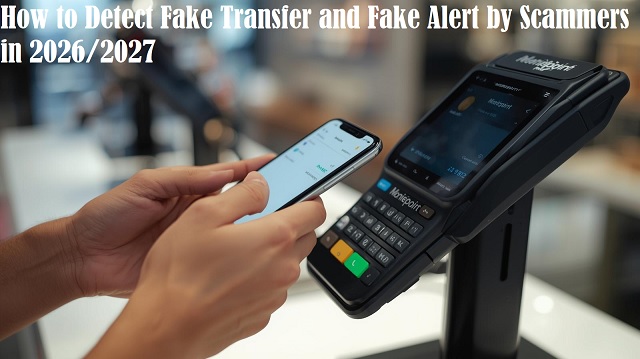
How to Detect Fake Transfer and Fake Alert by Scammers in 2026/2027
In Nigeria’s rapidly evolving digital economy, mobile banking, POS transactions, USSD payments, and fintech platforms have become everyday tools. While this transformation has improved financial inclusion, it has also given rise to sophisticated fraud schemes especially fake transfer alerts and fake credit notifications.
By 2026/2027, scammers are expected to become even more technologically advanced, leveraging SMS spoofing, social engineering, manipulated screenshots, cloned bank applications, and fake debit/credit alerts to deceive business owners, students, traders, POS agents, and even corporate organizations.
This comprehensive guide is written specifically for Nigerians, Africans, students, small business owners, POS operators, online vendors, and salary earners who must protect themselves from financial fraud. In this post, we will cover:
-
What fake transfer and fake alerts mean
-
Why scammers use this method
-
Common techniques used in 2026/2027
-
Red flags to identify fake alerts
-
Psychological manipulation strategies used by scammers
-
How fake transfers affect businesses
-
Real-world scenarios in Nigeria
-
Advanced detection strategies
-
Bank verification procedures
-
POS and fintech verification steps
-
What to do if you are scammed
-
Legal actions available
-
Real-life testimonies
-
Frequently Asked Questions
-
Professional prevention strategies
Understanding Fake Transfers and Fake Alerts
A fake transfer occurs when a scammer claims to have sent money to your account, but in reality, no actual transaction was processed through the banking system.
A fake alert is a fabricated notification often via SMS or screenshot designed to convince you that payment has been made.
The goal is simple: convince you to release goods, provide services, or send money before you verify the transaction.
Why Fake Transfer Scams Are Increasing in 2026/2027
Several factors contribute to the rise:
-
Increased use of mobile banking
-
Growth of online businesses and Instagram vendors
-
Heavy reliance on SMS alerts instead of account balance checks
-
Busy commercial environments (markets, fuel stations, supermarkets)
-
Lack of fraud awareness among small business owners
Scammers exploit speed, trust, and distraction.
Common Fake Alert Techniques Used by Scammers
1. SMS Spoofing
Scammers use software to send SMS that appear to come from legitimate banks. The sender ID may look exactly like your bank’s official SMS channel.
These messages often include:
-
Fake account numbers
-
Fake transaction references
-
Slightly altered formatting
Because many Nigerians rely solely on SMS alerts, scammers exploit this trust.
2. Edited Screenshots
Fraudsters manipulate banking app screenshots using editing software.
They may:
-
Change transaction amounts
-
Alter recipient names
-
Adjust timestamps
-
Insert fake reference numbers
Unsuspecting vendors accept screenshots as proof without verifying actual credit.
How to Detect Fake Transfer and Fake Alert by Scammers in 2026/2027
3. Fake Banking Apps
By 2026/2027, scammers are expected to create cloned banking interfaces that simulate real transfers. They show a “successful transfer” screen without connecting to the banking network.
Victims see convincing interfaces but no money enters their account.
4. Delayed Transfer Excuse
Scammers say:
“It’s a network issue. The alert will reflect shortly.”
They pressure victims to release goods while claiming the bank system is slow.
5. POS Fake Debit Confirmation
In busy environments, fraudsters may present manipulated POS confirmation messages, hoping the merchant does not confirm via settlement report.
Red Flags That Reveal a Fake Transfer
Learning to identify warning signs is critical.
1. SMS Without Account Credit
An SMS alert does not equal confirmed payment.
Always check:
-
Your banking app balance
-
Your USSD account balance
-
POS settlement report
If money is not reflected in available balance, it is likely fake.
2. Urgent Pressure
Scammers rush victims:
“I’m late.”
“My driver is waiting.”
“I have an emergency.”
Pressure is a psychological manipulation tactic.
3. Poor Grammar or Formatting
Fake SMS alerts often contain:
-
Spelling mistakes
-
Incorrect spacing
-
Inconsistent capitalization
-
Missing transaction codes
Official bank messages follow consistent formatting.
4. Different Sender ID Pattern
Look closely at:
-
Slightly altered bank name
-
Extra letters
-
Short codes instead of official sender name
5. Large Payment for Small Purchase
Fraudsters sometimes “overpay” intentionally and request refund of excess funds before you verify actual credit.
Psychological Manipulation Techniques Used by Scammers
Fraudsters understand human behavior.
Authority Manipulation
They may claim:
-
“I work with the bank.”
-
“I’m a military officer.”
-
“I’m a government official.”
This reduces suspicion.
Social Proof Strategy
They pretend to call someone on phone:
“Yes, I’ve sent the money.”
This staged performance builds false credibility.
Emotional Pressure
They may:
-
Bring children
-
Claim medical emergency
-
Use religious language
Emotion overrides rational verification.
How Fake Transfers Affect Nigerian Businesses
The financial impact can be devastating.
For POS Agents
Loss of ₦50,000–₦500,000 per incident.
For Market Traders
Goods released without payment.
For Online Vendors
Products shipped based on fake alert screenshot.
For Fuel Stations
Fuel dispensed before balance verification.
Real-World Scenario 1: Market Trader in Onitsha
A customer selected goods worth ₦85,000 and claimed to transfer via mobile banking. He showed SMS alert and rushed the seller.
Later, the seller discovered no credit entered the account.
Loss: ₦85,000 worth of goods.
Real-World Scenario 2: POS Operator in Ibadan
A customer “transferred” ₦150,000 and showed screenshot. The POS agent, distracted by crowd, handed over cash.
No actual credit occurred.
Loss: ₦150,000.
Real-World Scenario 3: Online Vendor in Lagos
Vendor shipped a laptop after receiving screenshot proof of ₦420,000 transfer.
The bank later confirmed no transaction was processed.
Loss: ₦420,000.
Why You Must Never Rely on SMS Alone
SMS alerts are secondary notifications.
Primary confirmation is:
-
Actual credit in bank account
-
Updated available balance
-
Verified transaction reference through official app
Banks clearly state: SMS alerts are for convenience only.
Early Prevention Principles
-
Never release goods without confirmed credit.
-
Always check account balance directly.
-
Train staff to verify before handing over goods.
-
Avoid emotional decision-making during transactions.
-
Install transaction confirmation systems in business premises.
Preparing for Advanced Scam Techniques in 2026/2027
As artificial intelligence and editing tools improve, fake alerts may become more realistic.
Therefore, detection must rely on:
-
Bank system verification
-
Real-time balance confirmation
-
Multi-step validation
Awareness is your strongest defense.
Advanced Verification Strategies for 2026/2027
As scam tactics become more sophisticated, verification must go beyond SMS alerts and screenshots.
1. Always Confirm Available Balance — Not Ledger Balance
There is a difference between:
-
Ledger balance (may reflect pending transactions)
-
Available balance (money you can actually withdraw)
Only release goods when the available balance increases.
2. Use Your Official Banking App — Not Just SMS
After any claimed transfer:
-
Log into your bank’s official mobile app.
-
Refresh your transaction history.
-
Confirm the transaction reference number.
-
Verify sender name and amount.
If the transaction does not appear in your transaction history, it is not valid.
How to Detect Fake Transfer and Fake Alert by Scammers in 2026/2027
3. Use USSD Balance Check as Backup
If your internet is slow, dial your bank’s official USSD code to check balance directly.
For example:
-
Dial your bank’s balance inquiry code.
-
Confirm that your balance has increased by the exact transferred amount.
Do not rely on a screenshot provided by the customer.
4. POS Settlement Report Verification
For POS operators:
-
Always check terminal settlement report.
-
Confirm successful transaction receipt from terminal system.
-
Do not release cash based solely on “successful” screenshot from customer.
POS systems are connected directly to acquiring banks — fake screenshots cannot alter settlement data.
5. Wait for Real Credit Alert from Bank Server
Official bank alerts are triggered from the bank’s core banking system.
Signs of real alerts:
-
Consistent formatting
-
Accurate account number
-
Correct sender information
-
Unique transaction reference
-
Simultaneous reflection in app
Fake alerts often lack backend confirmation.
What to Do If You Suspect a Fake Transfer
Immediate action reduces losses.
Step 1: Do Not Release Goods or Cash
Politely inform the customer:
“I will release goods once the transfer reflects in my account.”
Never allow emotional pressure to override verification.
Step 2: Verify With Bank Immediately
Contact your bank’s customer care line and provide:
-
Claimed transaction amount
-
Claimed reference number
-
Claimed time of transfer
Banks can confirm whether transaction exists.
Step 3: Delay the Customer
If suspicious:
-
Ask for ID
-
Request transaction receipt
-
Ask them to wait
Fraudsters often leave when confronted.
What to Do If You Have Already Been Scammed
If loss has occurred, act immediately.
1. Contact Your Bank Within Minutes
Report:
-
Transaction details
-
Phone number of scammer
-
Any account details used
Banks may attempt to place a “post no debit” restriction if funds are still in receiving account.
2. Report to Law Enforcement Agencies
In Nigeria, you may report to:
-
Police cybercrime unit
-
Economic and Financial Crimes Commission (EFCC)
Provide:
-
Screenshots
-
Phone numbers
-
CCTV footage (if available)
-
Witness statements
3. Preserve Evidence
Do not delete:
-
SMS messages
-
Screenshots
-
Call logs
-
CCTV recordings
Evidence strengthens investigation.
Legal Implications of Fake Transfer Fraud in Nigeria
Fake transfer scams fall under:
-
Cybercrime
-
Obtaining goods by false pretence
-
Fraud
Convictions may lead to imprisonment, fines, or both.
However, recovery depends on speed of reporting and traceability.
Real-Life Testimonies (2025–2026 Cases)
Testimony 1 – Supermarket Owner in Abuja
“A customer showed me a convincing alert of ₦230,000. I insisted on checking my banking app. Nothing reflected. He became aggressive and left. Later I realized it was fake. Verification saved me.”
Testimony 2 – POS Agent in Kano
“I lost ₦95,000 because I trusted screenshot. After that incident, I never release cash until balance increases. I now verify twice.”
Testimony 3 – Online Fashion Vendor in Port Harcourt
“A buyer sent fake transfer proof. I waited until my bank app confirmed credit before shipping. It never reflected. That decision prevented loss.”
Frequently Asked Questions (FAQs)
1. Can scammers hack bank SMS sender ID?
Yes. SMS spoofing technology allows fraudsters to imitate bank sender names.
2. Is a screenshot valid proof of payment?
No. Only confirmed credit in your bank account is valid proof.
3. How long should I wait before confirming transfer?
Real transfers usually reflect within seconds to minutes. If not reflected within reasonable time, verify through bank.
4. Can banks reverse fake transfers?
If no real transfer occurred, nothing can be reversed. If scam involved actual transfer manipulation, recovery depends on speed of reporting.
5. Are fake alert cases increasing in 2026/2027?
Yes, especially with advanced editing tools and AI-generated interfaces.
Advanced Prevention Framework for 2026/2027
To protect your business, implement these systems:
How to Detect Fake Transfer and Fake Alert by Scammers in 2026/2027
1. “No Balance, No Goods” Policy
Make it clear to customers:
Goods or cash will only be released after confirmed balance increase.
Display notice in your shop.
2. Staff Training
If you have employees:
-
Train them on verification procedures.
-
Establish strict transaction confirmation rules.
One careless employee can cause large losses.
3. Install CCTV Cameras
Visible cameras discourage fraud attempts.
4. Separate Transaction and Customer Interaction
Avoid multitasking during payments.
Focus solely on verifying transfer before packaging goods.
5. Maintain Fraud Awareness Updates
Stay informed about:
-
New scam patterns
-
Banking security updates
-
Cybercrime trends
Warning Signs of Highly Sophisticated 2026/2027 Scams
Be alert for:
-
Perfectly formatted fake SMS
-
AI-generated voice calls pretending to be bank officials
-
Fake bank customer care numbers
-
Social media impersonation accounts
Always verify through official bank channels only.
Psychological Discipline: The Most Important Defense
Fraud prevention is not only technical — it is psychological.
Scammers succeed because victims:
-
Feel pressured
-
Feel embarrassed to question customers
-
Fear losing sales
-
Trust too quickly
Professional mindset requires:
Verification before emotion.
Expert-Level Recommendations for Nigerian Businesses
-
Use instant balance notification apps.
-
Check both SMS and app confirmation.
-
Confirm transaction reference through bank system.
-
Refuse rushed transactions.
-
Educate fellow traders and POS operators.
-
Avoid refunding “overpayment” before verifying actual credit.
-
Keep emergency reporting contacts accessible.
Final Professional Conclusion
Fake transfer and fake alert scams will likely become more technologically advanced in 2026/2027. However, their success still depends on one factor: human error.
Scammers rely on:
-
Distraction
-
Urgency
-
Emotional manipulation
-
Lack of verification
By implementing strict verification policies, educating staff, using official banking tools, and refusing to release goods without confirmed balance credit, Nigerians can significantly reduce fraud losses.
In today’s digital economy, caution is not optional it is a business survival strategy. Protect your business. Verify every transaction. Trust system confirmation, not screenshots. Fraud prevention begins with discipline.